ABOUT ERVEXILIANA
Ideas worth
working through.
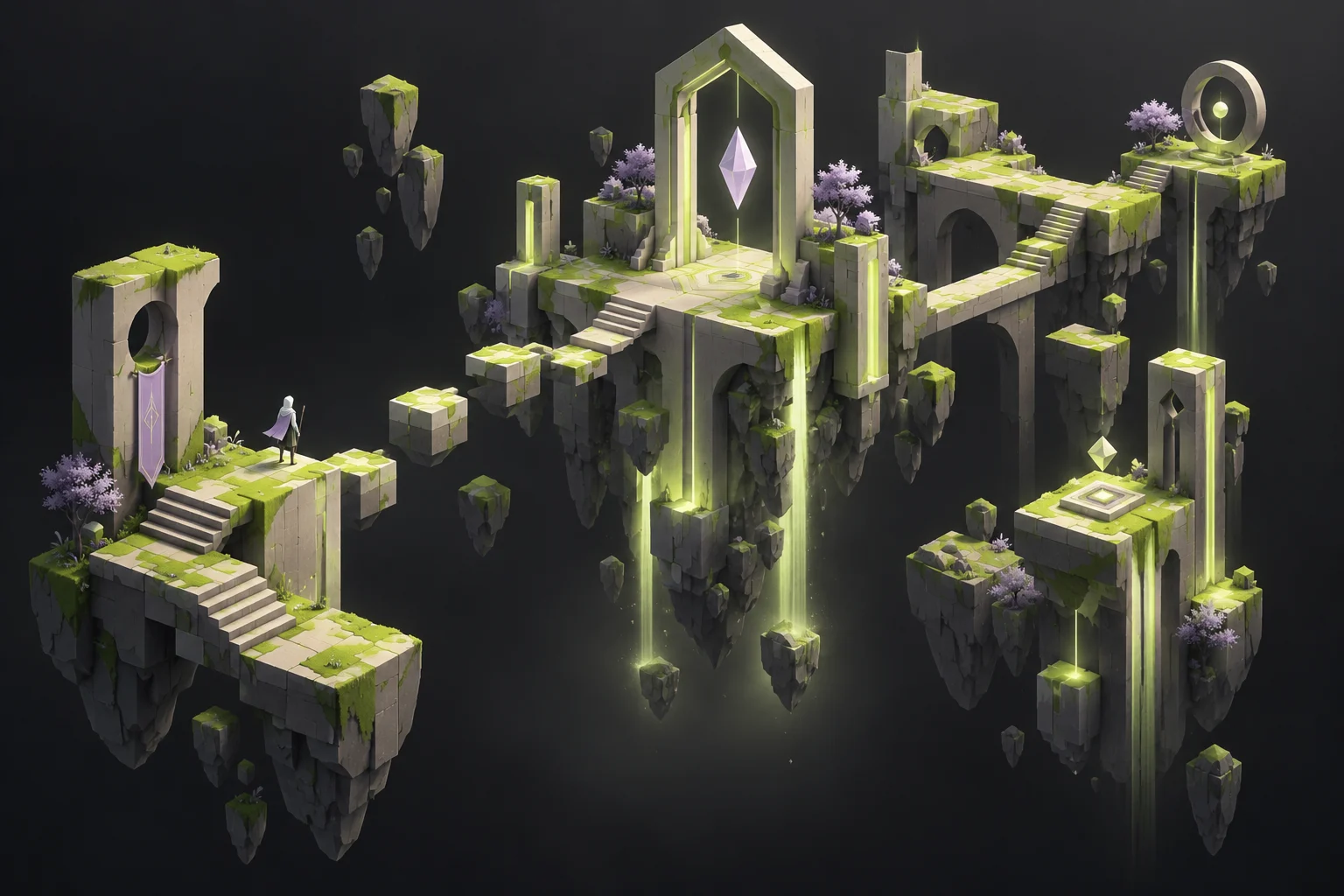
A focused library for independent study.
Game development brings many kinds of thinking together: rules, spaces, feedback, and the experience of another person playing. Ervexiliana organises these subjects into downloadable reading guides. You can study one topic without committing to a fixed timetable or a subscription.
The library is built for people who prefer to read, annotate, and return to a page later. Each title is a separate PDF purchase with its own outline. You choose a subject that matches the work in front of you, rather than following a single prescribed path through every title.
How the material is written
Our approach is to name a concept, explain its role, and give you something to examine in your own work. The collection moves from the shape of a small idea to systems, interfaces, testing, and project planning. The guides use written explanations and exercises rather than recorded classes.
A typical chapter introduces a term, shows where it appears in a small design problem, and then asks you to apply it to a scene, loop, or document of your own. The exercises are prompts for practice. They are not graded, timed, or certified.
We keep the language direct. Where a method has trade-offs, the text says so. The aim is to make the subject easier to inspect, not to present one technique as the only correct choice.
What the collection covers
The titles sit next to one another as a library, not as a single bundled programme. Early guides look at the shape of a playable idea: what the player does, what repeats, and what can reasonably fit in a first prototype. Later titles look at systems that connect those ideas, the way an interface communicates state, how tests catch unexpected behaviour, and how a project can be planned without inflating the scope.
Different readers begin in different places. Check the intended level and module list on each page, and try Free File to see whether the reading format suits you. Higher-priced guides cover different topics; they do not automatically include the rest of the collection.
If you already have a small prototype, an intermediate title may be a better starting point than an introductory one. If you are still naming the first loop, begin with the free file and the earliest paid guide that matches that stage.
How study is intended to work
The materials are designed for self-paced reading. There is no live classroom, no cohort schedule, and no membership community included with a purchase. An internet connection is needed to download the file. After that, the PDF can be opened offline in a compatible reader on a computer, tablet, or phone.
You can pause between chapters, sketch on paper, or return to a section after a playtest. The format is meant to sit beside your own notes rather than replace them. Suggested study times on product pages are estimates only; actual reading time depends on your pace and how much you practise.
What these materials are — and are not
These materials are independent educational resources. We do not claim accreditation, a guaranteed outcome, or qualifications that have not been documented. Completing a guide does not confer a professional title, a job placement, or a finished commercial game.
Software licences, game engines, art assets, and hosting tools are not included unless a product page states otherwise. The purchase is for the written guide described on that page.
Publisher contact information is available on the contact page. Questions about an order, a download, or a file should include the guide name, order reference, and the email used at checkout.
Find a topic to explore ↗